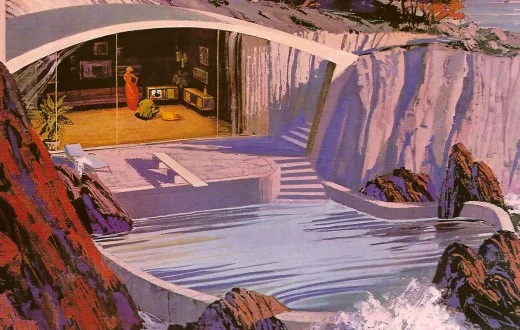
House of the Future, Motorola Advertisement, 1961
Illustrated by Charles Schridde
Color Illustrations | Charles Schridde | 740
/
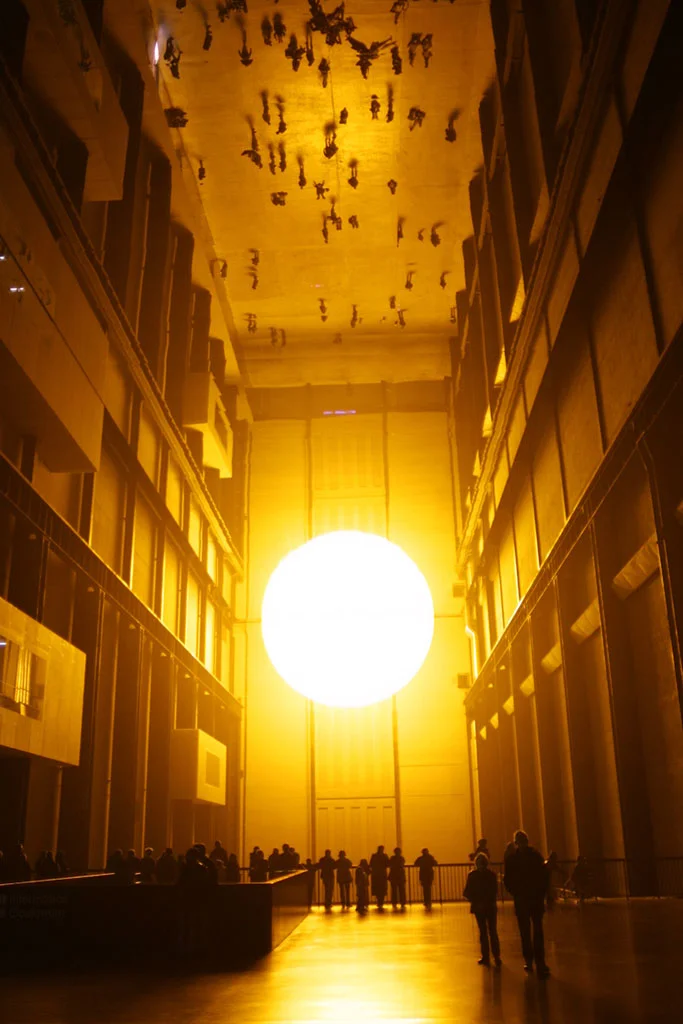
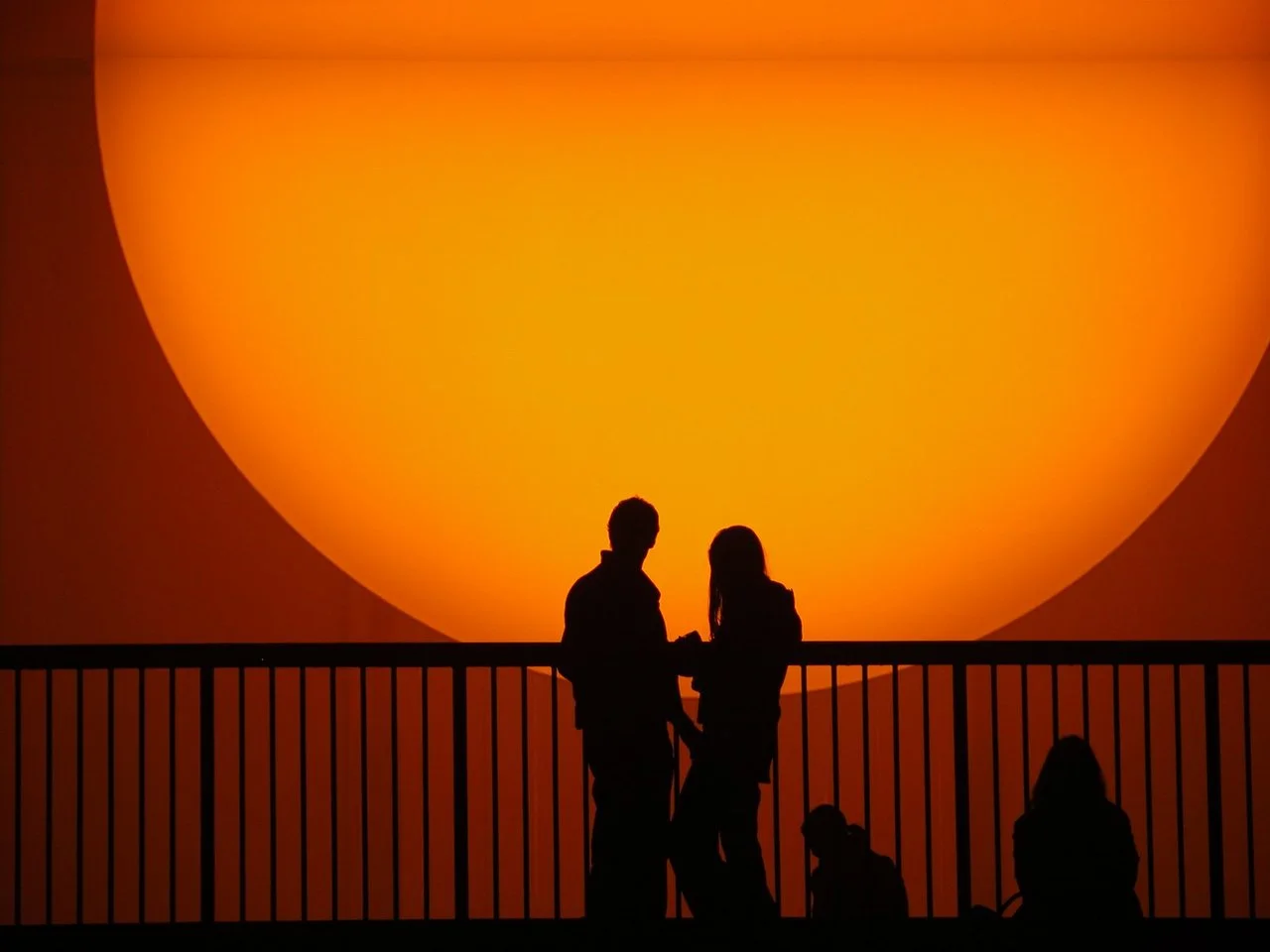
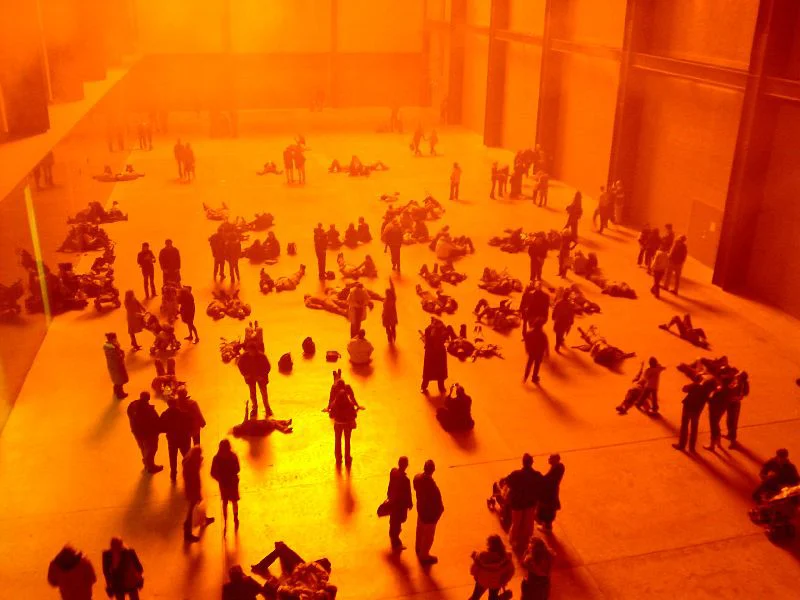
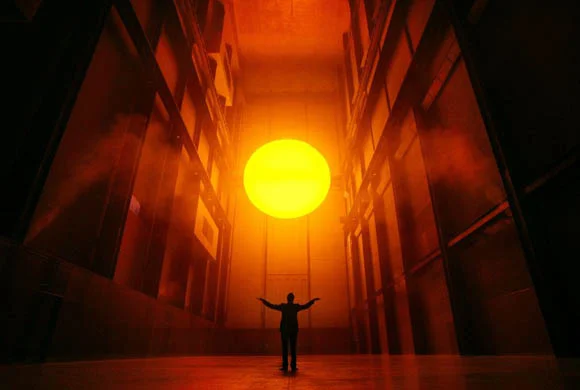
Olafur Eliasson, The Weather Project
In this installation, The Weather Project, representations of the sun and sky dominate the expanse of the Turbine Hall. A fine mist permeates the space, as if creeping in from the environment outside. Throughout the day, the mist accumulates into faint, cloud-like formations, before dissipating across the space. A glance overhead, to see where the mist might escape, reveals that the ceiling of the Turbine Hall has disappeared, replaced by a reflection of the space below. At the far end of the hall is a giant semi-circular form made up of hundreds of mono-frequency lamps. The arc repeated in the mirror overhead produces a sphere of dazzling radiance linking the real space with the reflection. Generally used in street lighting, mono-frequency lamps emit light at such a narrow frequency that colours other than yellow and black are invisible, thus transforming the visual field around the sun into a vast duotone landscape. (via)
/
 (via
(via /

The City Lights Globe
This rotating globe illuminates to show how the world’s cities look at night from space. True to the view from orbit, the globe glistens with a soft white glow in major metropolitan areas throughout Eastern Europe and North America and has sparsely lit areas scattered throughout Africa and Russia.
The city lights automatically illuminate in low ambient light and dim when the globe is exposed to light, displaying a multicolor political map with topographical shading and place names for major cities, countries, and bodies of water. The 10” globe rotates automatically on a mirrored base that reflects Antarctica and the surrounding bodies of water.
/

/
/
/
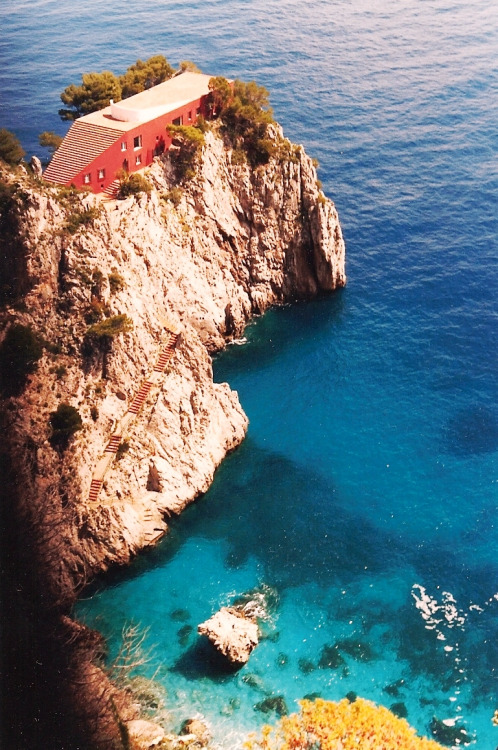
villa malaparte, adaberto libera. capri, italy.
/
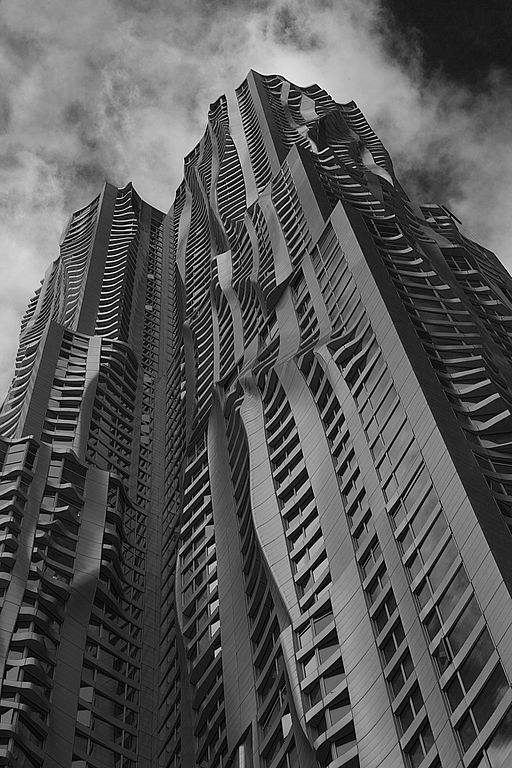
Frank Gehry, 8 Spruce Street, New York, 2011.
/
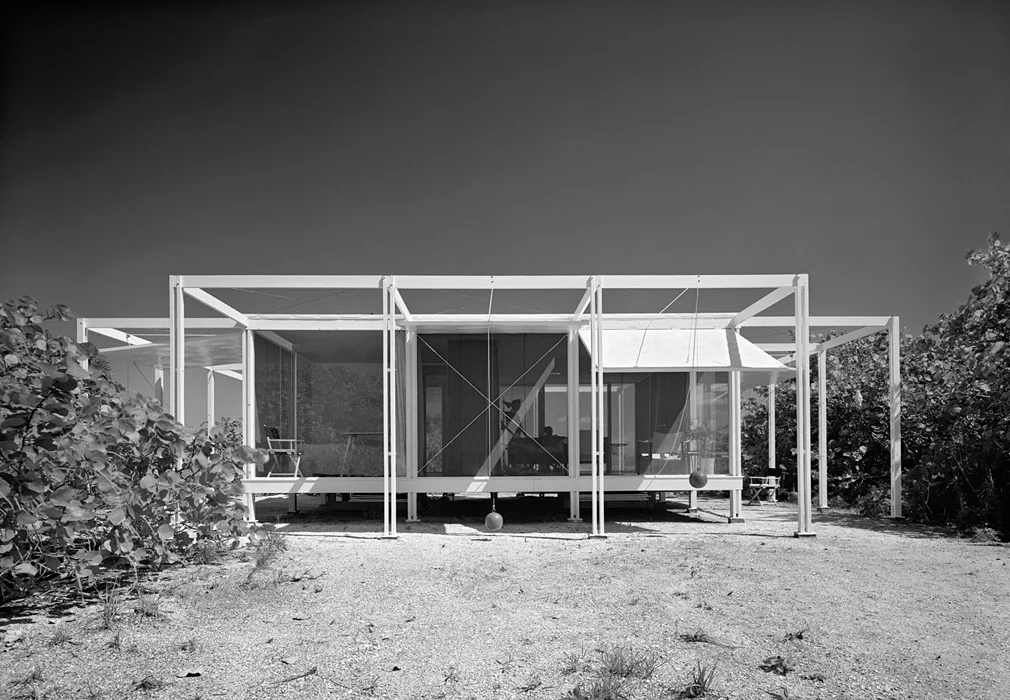
(via: subtilitas)
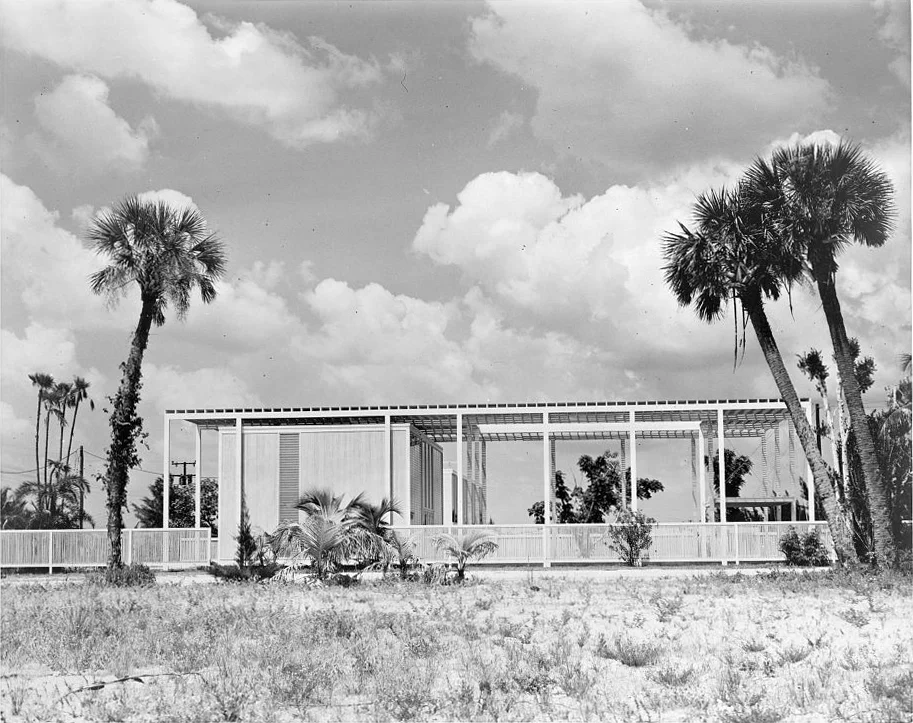
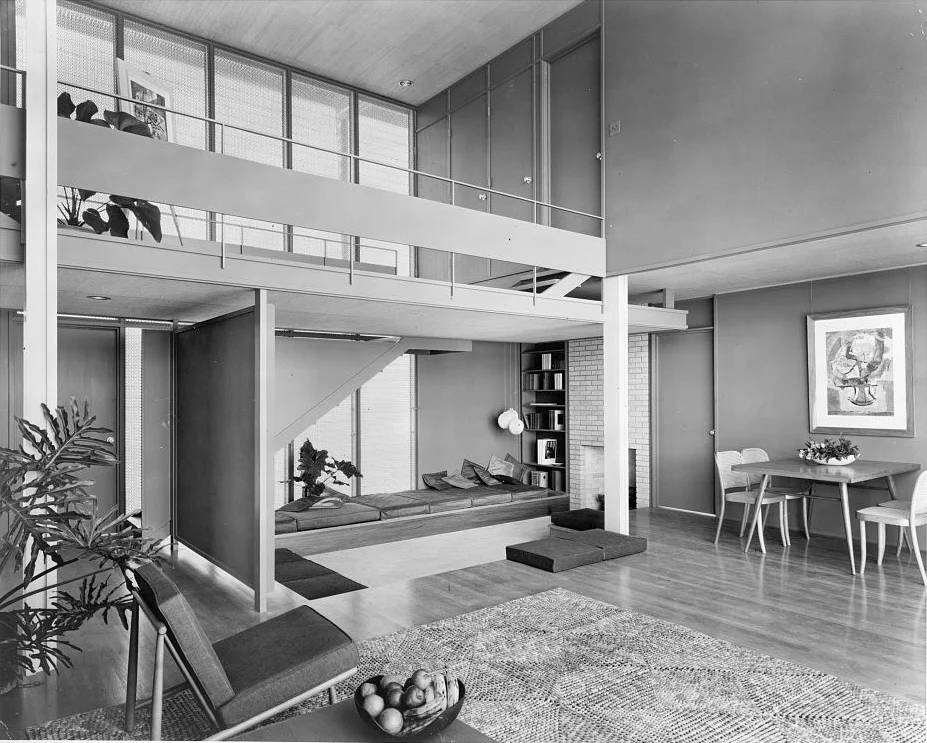
Paul Rudolph - Walker Guest House, Sarasota FL 1953. Via.
/
/
/
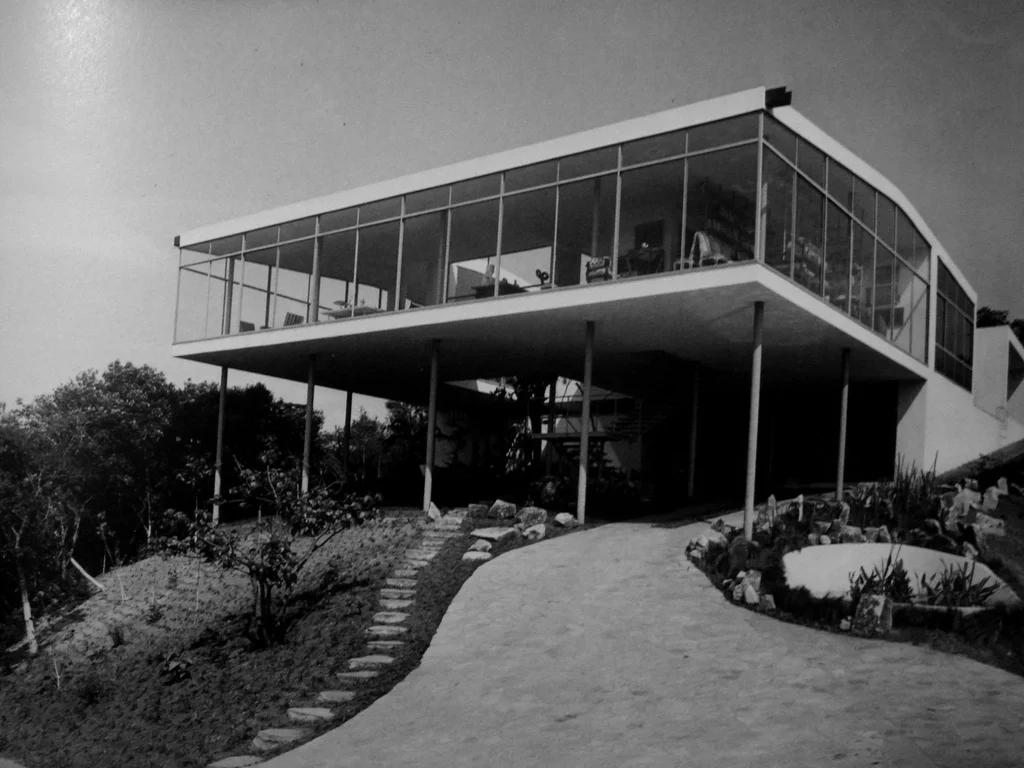
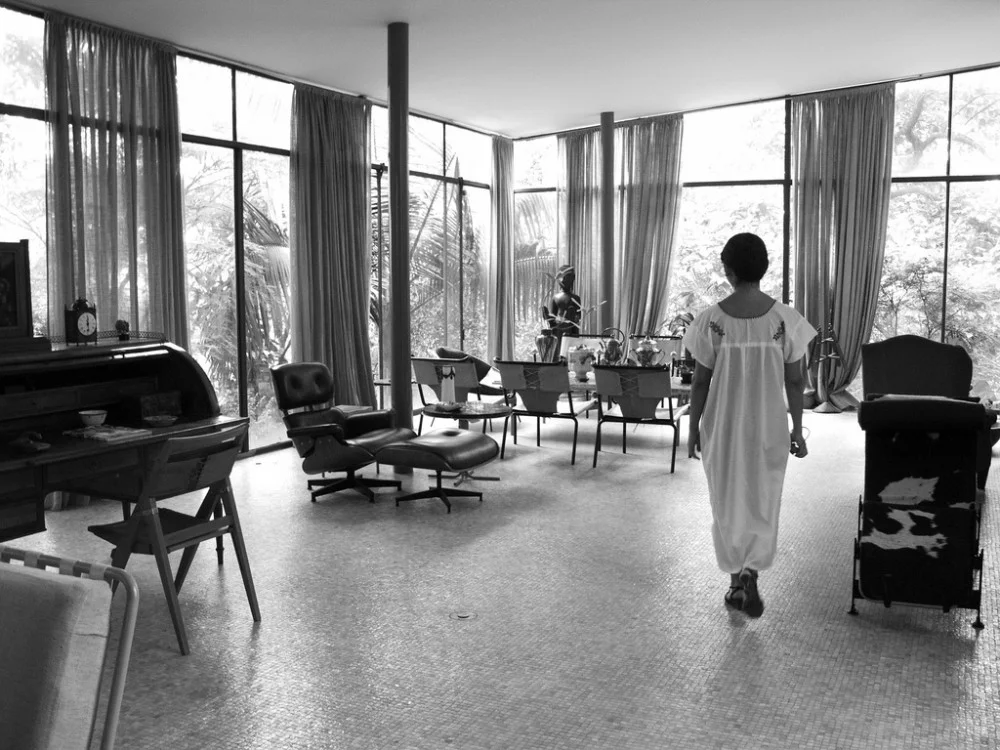
Lina Bo Bardi is an icon of modernist architecture in Brazil. Although born in Italy, she eventually decided to stay in Sao Paulo. In 1951 she completed her first project, the “Glass House” in a town south of Sao Paulo. The house is now a national architectural monument and is known for its refined details and the use of items associated with advanced manufacturing techniques and for being an “open house”. The vertical structure of the house is composed of steel tubes, with slabs and other structural elements of reinforced concrete.
Source: plataformaarquitectura.cl
/

The uncovering and exhibiting of Seuthopolis by architect Zheko Tilev, 2005.
Seuthopolis, the city of the Thracian king Seuthes the IIIrd, and the capital of the ancient state of Odrissia, (end of IV c. BC.) was discovered and explored in 1948 - 1954 during the construction of the Koprinca dam. Unfortunately, after the dam was filled with water the first and the best preserved Thracian city in modern Bulgaria remained on the bottom of the artificial lake. This mistake, from the times of historical and national nihilism, can be corrected today and Seuthopolis can be returned into the treasure house of world cultural heritage.
The project file can be downloaded as pdf here.
via mikasavela
/
/
/
/
/
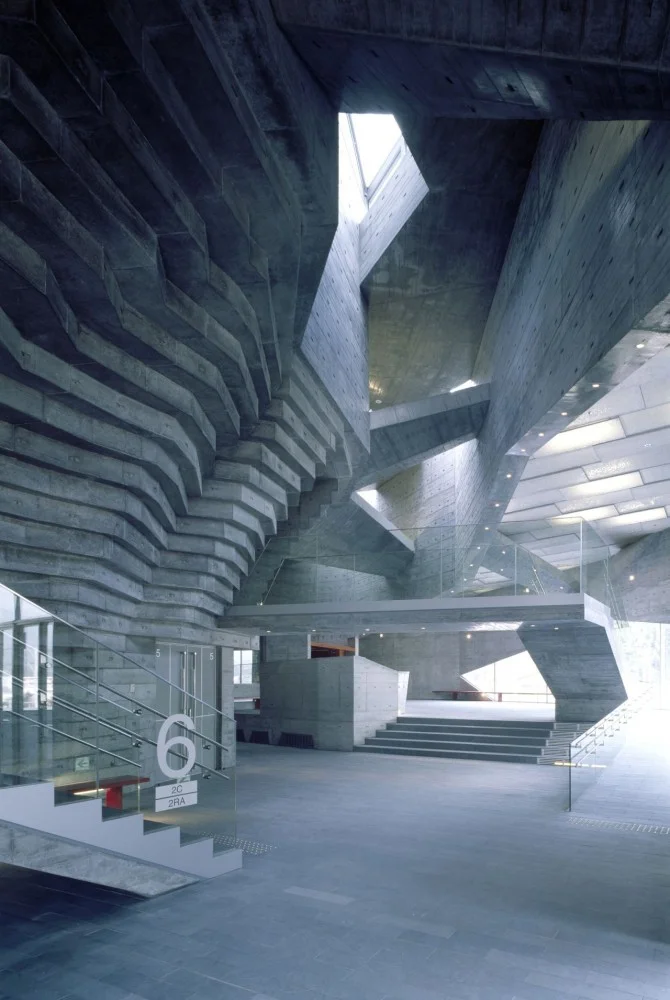
Ofunato Civic Center and Library
Chiaki Arai Urban and Architecture Design
/


new spa at palais thermal, black forest of germany/kauffmann theilig & partner
via: blueverticalstudio