nature has a way of keeping the air clean... by Thomas DeVoss

In this rather concise TED video, Kamal Meattle explains that there are three common plants that can be used to grow all the fresh air needed to maintain human health.  Research suggests that these plants can help with tight, energy-efficient structures to mitigate what’s commonly referred to as sick building syndrome.  The plants are:


  • Areca palm (chrysalidocarpus lutescens): converts CO2 into oxygen.
  • Mother-in-law’s tongue (sansevieria trifasciata) – converts CO2 into oxygen at night.
  • Money plant (epipremnum aureum) – removes formaldehyde and other volatile chemicals.

Meattle mentions certain “NASA learnings,” and it turns out the government backed a substantial amount of research in this area.  For example, in a report [PDF] published in September 15, 1989, NASA concluded: “If man is moved into closed environments, on Earth or in space, he must take along nature’s life support system.

by Thomas DeVoss

a-rchitecture:

The Cube
a project by Make
Birmingham, United Kingdom, Completed 2010

 
The Cube is a new landmark destination in central Birmingham. This competition-winning 23-storey scheme comprises a true mix of uses: offices, apartments, parki…

a-rchitecture:

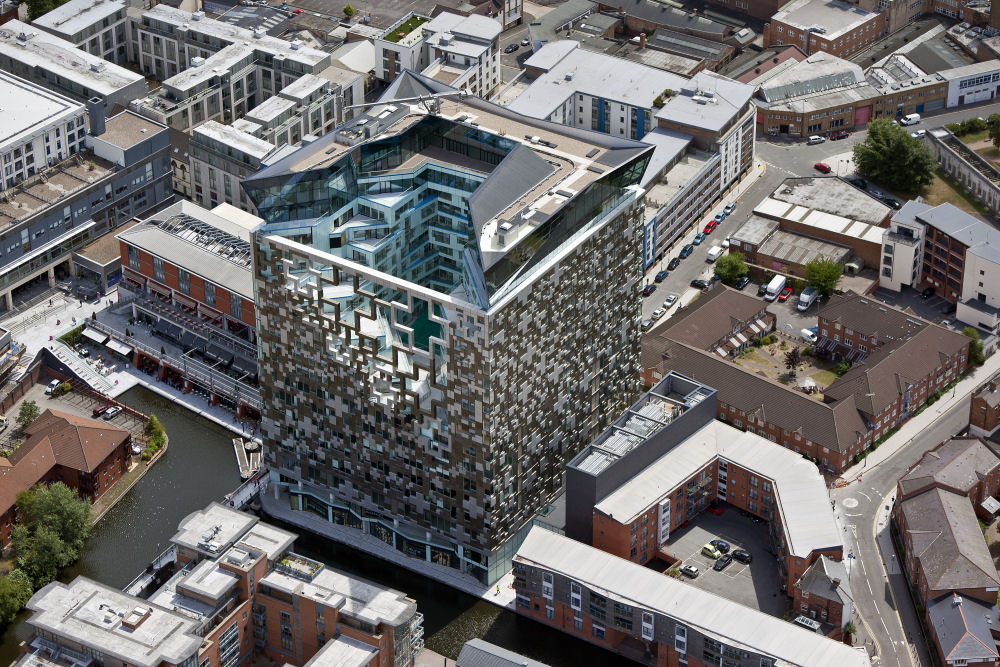
The Cube

a project by Make

Birmingham, United Kingdom, Completed 2010

The Cube is a new landmark destination in central Birmingham. This competition-winning 23-storey scheme comprises a true mix of uses: offices, apartments, parking, retail, hotel, spa, restaurants and ‘sky bar’. The design is based on the contrast of Birmingham’s industrial heritage: heavy industry metal working and fine hand-crafted jewellery. Set on a glazed plinth, the building acts as a protective metal box, pure in form, assembled from tessellated, glistening components, which gives way to a glassy, twisting courtyard.

Like a jewellery box which can’t quite contain its contents, this courtyard erupts at the top with an angular, asymmetric ‘crown’. Unlike many residential developments, which offer a standard range of undifferentiated units, the ‘twisting’ geometry of the courtyard creates 35 different types of apartments which are far from uniform – ranging from high-level, three-bedroom duplexes to small ‘crash pads’. The openness, simplicity and flexibility of these units is manifested through sliding walls, recessed hold-open doors and light shelves.

Occupants open their front doors to face large picture windows offering views out across the city or central courtyard. A consistent palette of stone and glass is used throughout the kitchen and prefabricated bathrooms, designed by Make. Two circulation cores located on opposite sides of the building has allowed the developer to separate the two types of tenancy. One half of the building contains 151 ‘buy-to rent’ apartments - purchased primarily as investments; the other half contains 93 ‘buy-to-live’ units designed for owner-occupiers. Over half of the 244 apartments have been sold off-plan.

The Cube uses a number of passive features to optimise its ecological impact such as post-tensioned floor slabs, air-tight, insulated panels, and varying the ratio of solid-to-glass varies according to the direction of each facade. A centralised plant, across all the building’s uses, ensures cost and environmental efficiencies and provides under-floor heating to each apartment.

Credits:

World Architecture News

by Thomas DeVoss

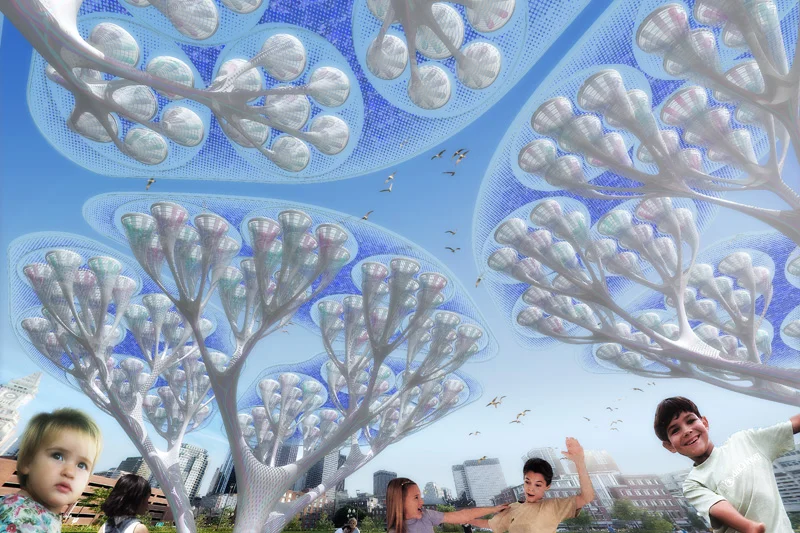
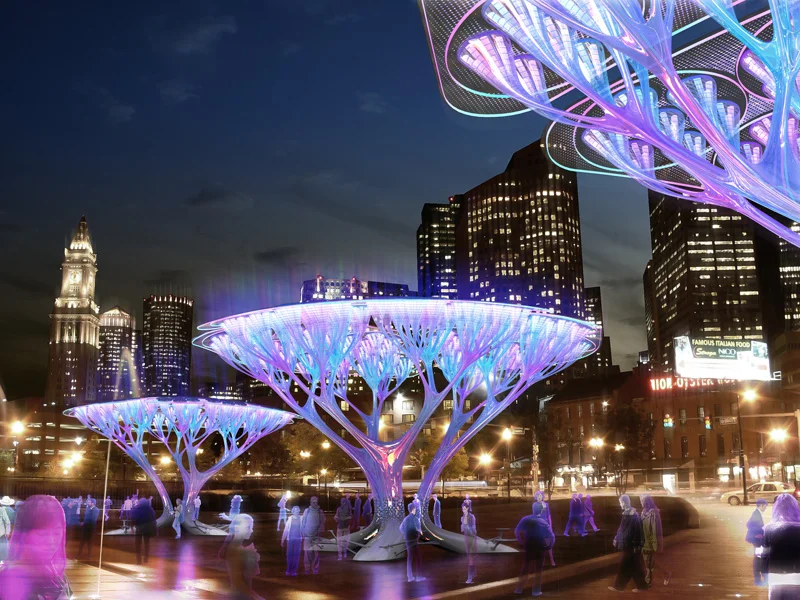
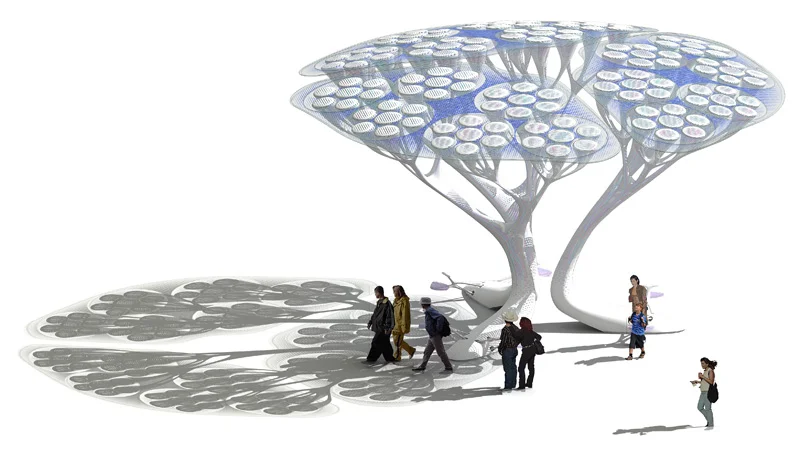
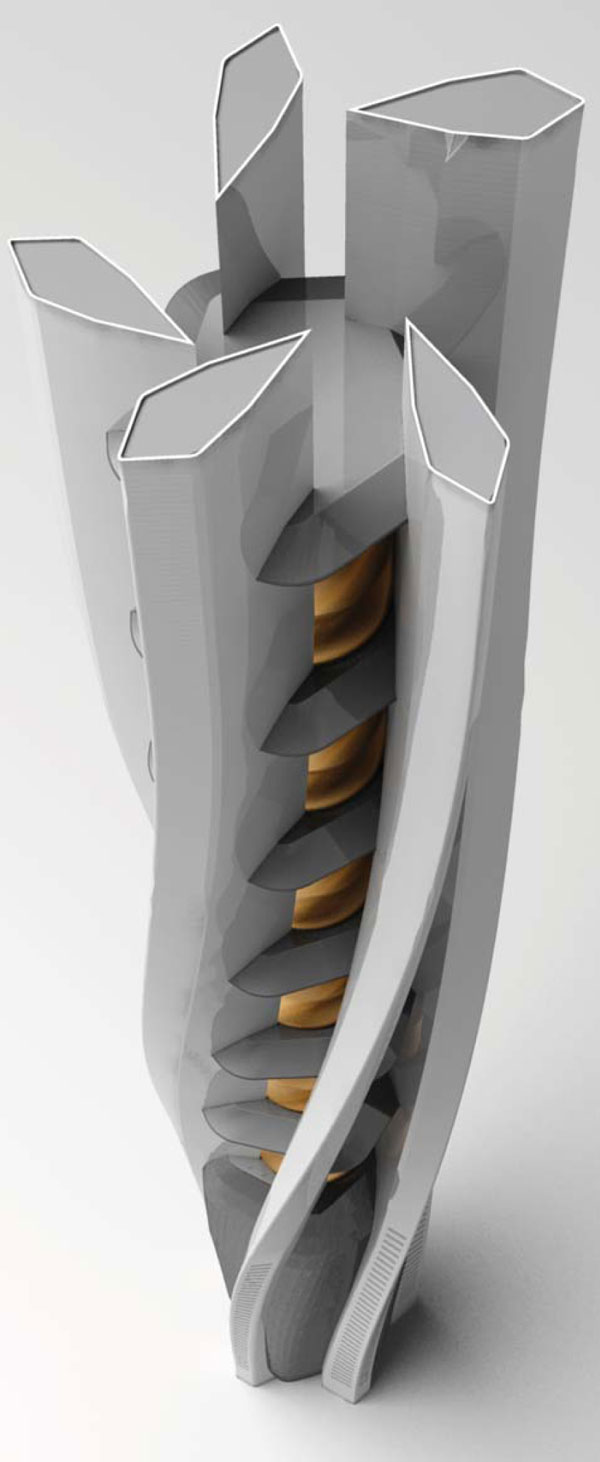
Boston’s TREEPODS INIATIVE proposes to embody, and artificially enhance, the most important biological characteristic of natural trees: the capacity to clean the air, taking the CO² and releasing O².

Boston’s TREEPODS INIATIVE is a sustainable project leaded by Influx_Studio and ShiftBoston. The aim ff this collaboration is to allow the achievement of Boston’s global goals in terms of carbon reduction programs in the short time, giving us enough time to make the change from the present fossil fuel economy into a new Zero carbon energy economy.

The proposal could be define as a CO2-scrubbing living machine. Treepods may well redesign in an urban radical new way our polluted urban environment, interacting with natural trees, and enhancing its carbon absorption capacity. In that way, those artificial trees don’t replace the natural ones, but they act like small urban “air cleaning infrastructures”. Advanced technologies are actually already developed that allow the capture of the atmospheric carbon dioxide from ambient air in an efficient, economic and sustainable way. Developed by Dr Klaus Lackner, Director of the Lenfest Center for Sustainable Energy at Columbia University, this revolutionary process is based on the discovery of the ‘humidity swing,’ a technology that enables the energy-efficient capture of CO2 from air, allowing to close the carbon cycle and creating a valuable product for beneficial use.

Biomimicry

The aim of the project is create, using biomimicry, an air cleaning and CO² catcher integrated urban device. Looking at nature we can learn from one of the most unique trees in the world, the Dragon Blood Tree (Dracaena cinnabari). Its branches at maturity produce an umbrella shaped crown optimizing its form to create a canopy that provides a maximum of shading surface. The way that its canopy allows the wind flow is showing us an intelligent form like design. The TREEPOD will ne inspired by that, as well as by its branching structure in terms of storage and distribution of resources from ground to the canopy.

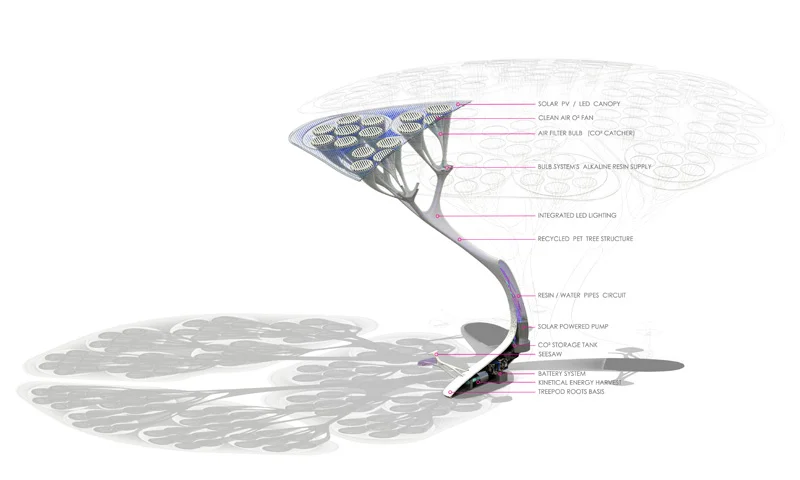
The TREEPOD takes the Dragon tree like form to create an important canopy surface that will provide shadow, and that will host a solar pv (sun tracker latest technology) to harvest the energy necessary to powered the air cleaning system and the urban lamp function. The canopy branching structure ends with a myriad of bulbs. They multiplies the contact points between air and the CO², serving as a filter. Working like as alveoli in a human lung, here is where the cleaning gaseous exchange takes place: an alkaline and environmentally friendly resin that reacts with air holding CO². When the CO² saturated resin reacts with water it release CO² for storage, and then it could be used again in the same process.

Structure

The tree will be made with a recycled and recyclable plastic. We propose to use the PET (Polyethylene terephthalate). It is the material commonly used for drink bottles. It presents several relevant advantages: it’s available in large quantities as recycled raw material, it can assume different colorations and degrees of transparency, it can be easily processed to obtain complex forms, it has good tensile resistance and mechanical properties. The entire TREEPOD structure is composed by modular elements, assembled as shown in the scheme.

Urban strategy

We suggest to create a network of TREEPODS system using this new technology, that will embraces the whole city of Boston. Based in its modular capacity, issued from a honeycomb hexagonal geometry, the prototype is able to reach tree different levels of assemblage and urban function: The basic isolated unit as urban furniture. Three assembled units forming a hexagon define the TREEPOD, with social functions that a natural tree had. And finally, a group of trees, creating a great urban canopy, defining places to be.

Social interaction

The TREEPOD will have a social role in the community. It could be an interactive interface, allowing people to interact with the tree and each other. People could play and learn about the ecological paradigm shift. At its basis the tree will host a playing device: a seesaw that harvests kinetic energy. It will allow people to be involved, displaying information in “augmented reality” about de-carbonization process, about sustainable behaviors etc, proposing depending the urban and social context, different ways to help people collaborate each other and to engage citizens in the green agenda.
by Thomas DeVoss

Third Place
2011 Skyscraper Competition

Yheu-Shen Chua
United Kingdom

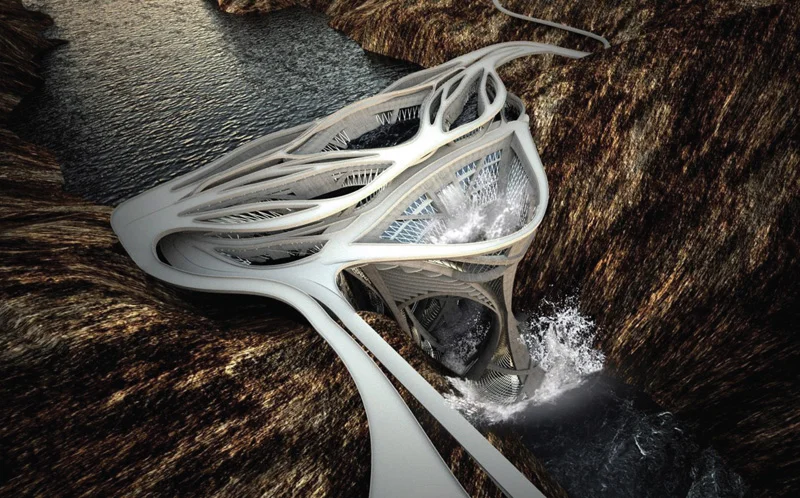
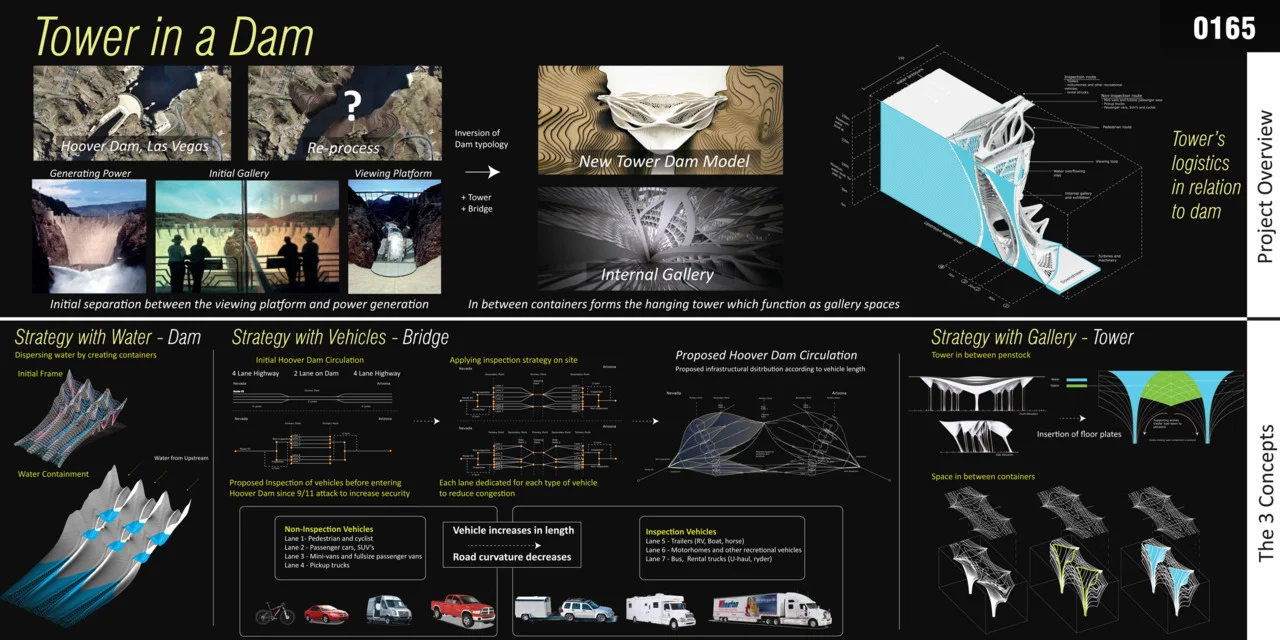
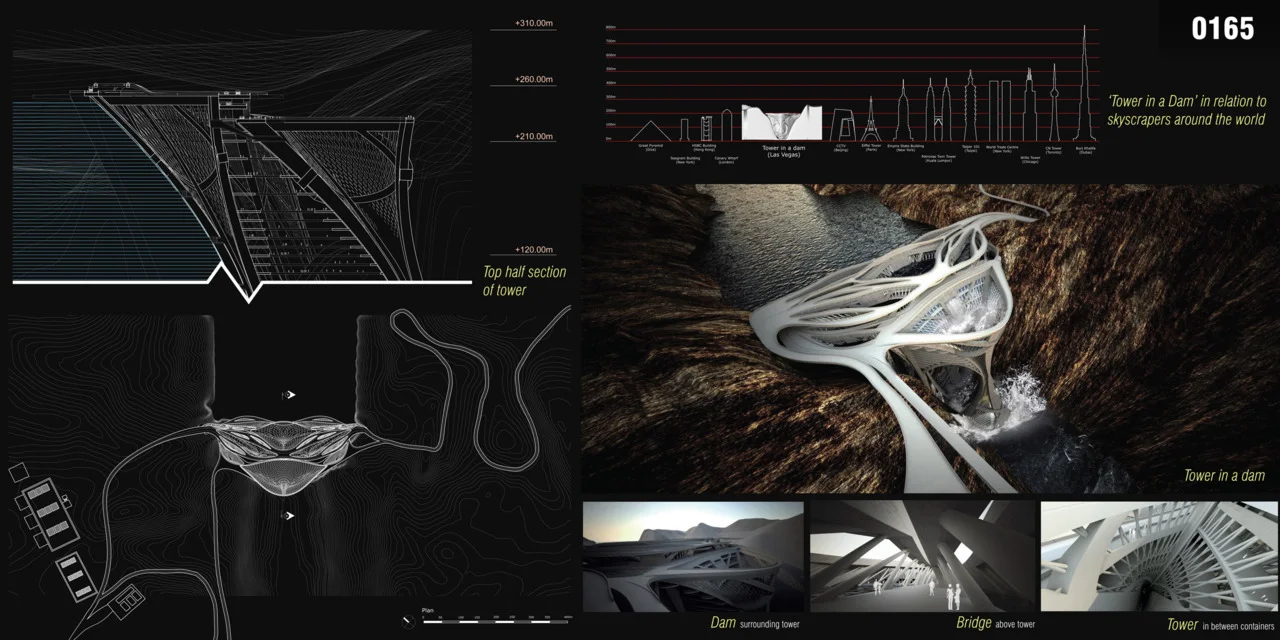
The current public amenities of the world-famous Hoover Dam in the United States consist of a viewing platform, a bridge, and a gallery scattered around the entire site. This project aims to reconfigure these programs by merging them into a single vertical super structure.

One of the main purposes of the project is to allow the water from the upstream river to engage directly with the visitors through a series of containers. A hanging tower above the 700-foot drop into the Black Canyon would be used as gallery and a vertical aquarium.

by Thomas DeVoss

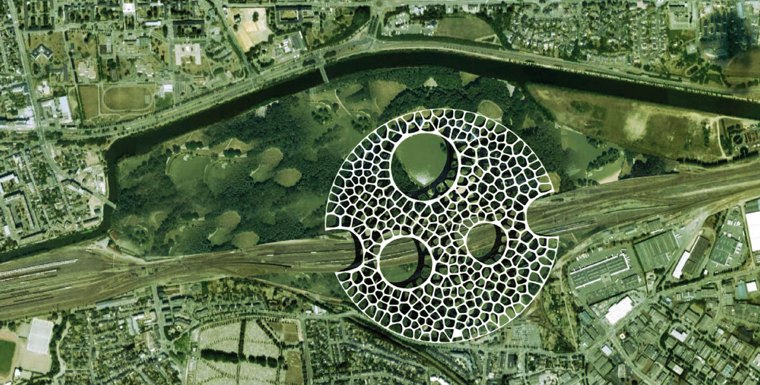
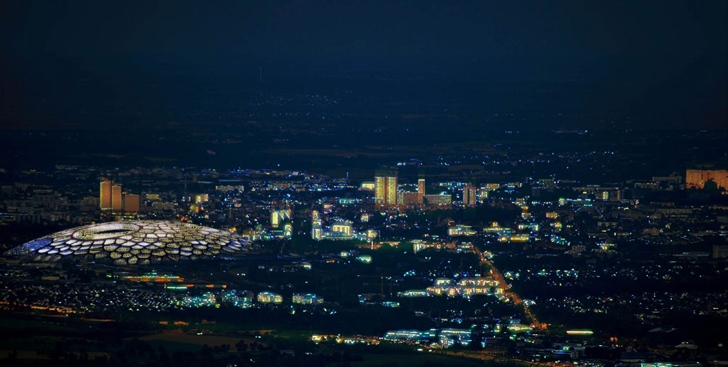
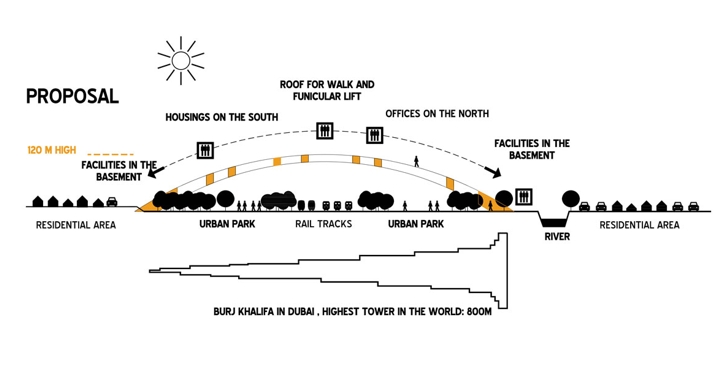
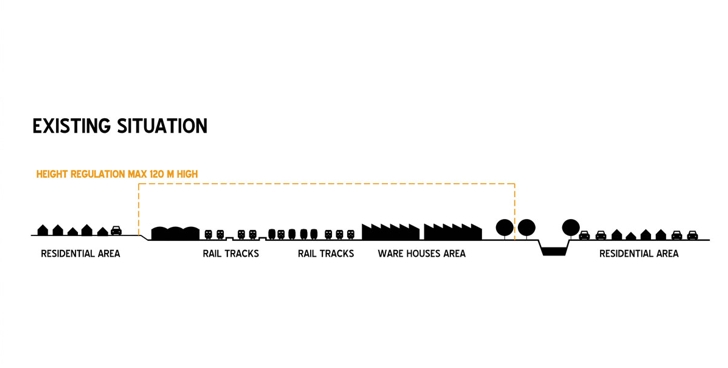
The massive arch is 800 meters across or the length of the Burj Khalifa building set on its side. The principle was to build a large building without disrupting the skyline of a midsized city. Sizable honeycomb perforations allow daylight into the green space below while providing windows for the complex’s rooms.

The building will hold recreational facilities at the ground level and residential and office spaces inside the vast complex above. Spaces can be arranged as clusters to provide for the needs of the inhabitants. Connectivity is achieved by an automated transport system.

The roof mimics a hill, providing an optimal space to install solar electric panels on the southern face. The building also can collect rainwater for domestic use or to feed the urban green space below its arched mass. The design team note that while this project was placed in Rennes, France, it could work well in many mid sized cities.

+ eVolo Skyscraper Competition

+ Flat Tower

Read more: Flat Tower: Massive Honeycomb Skyscraper Arches Over Green Space Flat Tower eVolo Skyscraper Competition (2) – Inhabitat - Green Design Will Save the World 

by Thomas DeVoss

acidadebranca:

The Wind Tower is a spiraling mega-structure designed by British architects David Arnold and Alexa Ratzlaff as a twisted steel and concrete diagrid aerodynamically shaped to take advantage of the prevailing wind currents. At the cent…

acidadebranca:

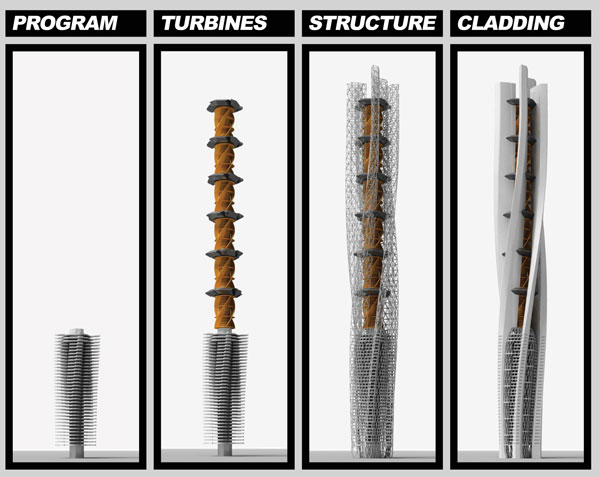
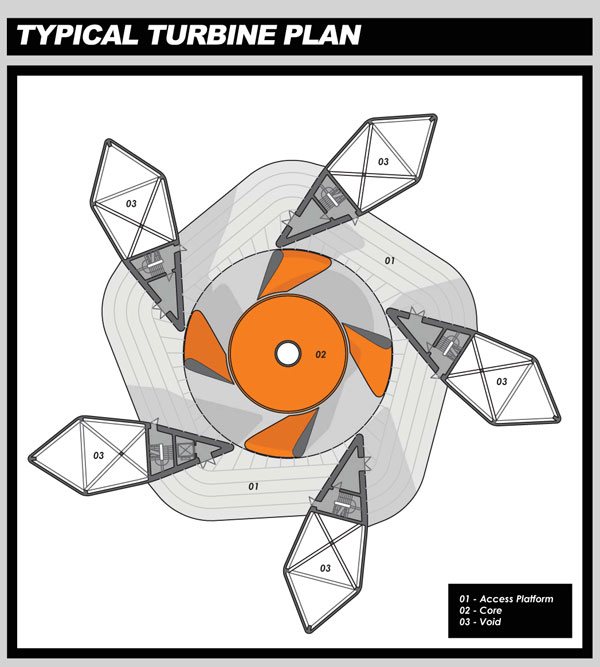
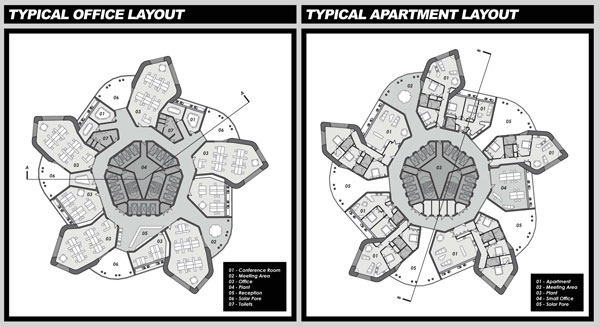
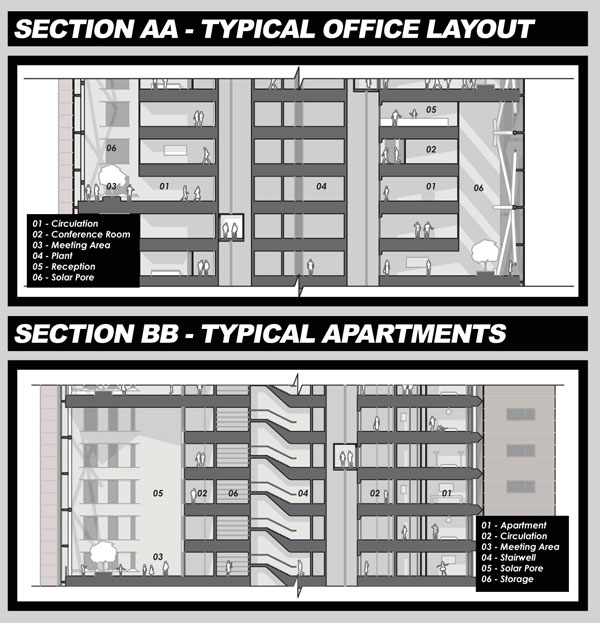
The Wind Tower is a spiraling mega-structure designed by British architects David Arnold and Alexa Ratzlaff as a twisted steel and concrete diagrid aerodynamically shaped to take advantage of the prevailing wind currents. At the center of the tower is the core which contains the main vertical circulation and storage areas. Spiraling around the core is a series of platforms that will accommodate a variety of programs including commercial, residential, institutional, and recreational facilities. Located above the program, turbines measuring 45 meters will generate enough power for 2,000 residences.

via