/
/
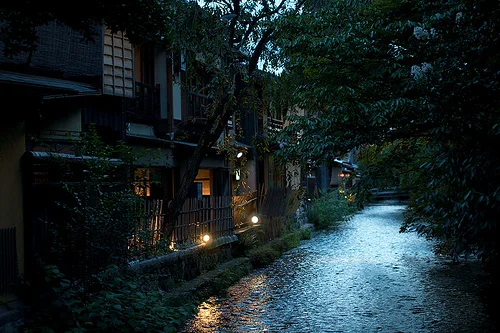
Gion (by Christoph Ballhause)
/
/
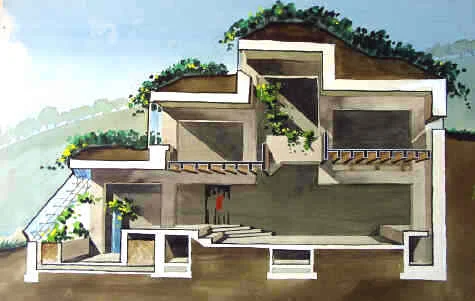
i find this just gorgeous
Oh yes
/
/
/
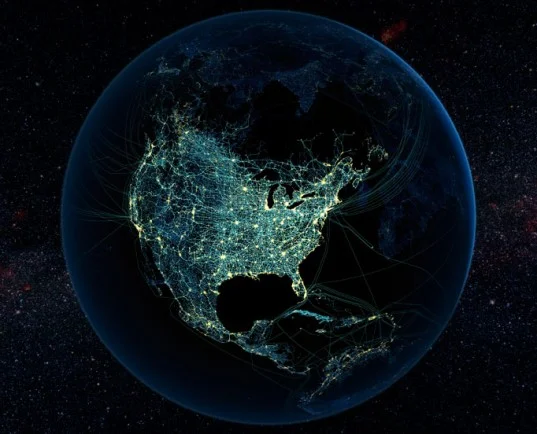
“Mapping the Anthropocene: first few steps.
…This page is dedicated to the impressionist mapping of the artifacts from this singular moment in Earth’s history. Impressionist because these maps are unlabelled and silent, giving free rein to contemplation and imagination; impressionist also because they do not follow the canons of cartography, where scales and legend are mandatory. By locating the structures and hotspots of human activity, by acknowledging the extent of our footprints and our facilities, perhaps we will glimpse the limits of our world and the importance of redefining what it means to live in and on it. Comments? Suggestions? Your feedbacks are more than welcomed: info [at] globaia [dot] org NOTE: The items on these maps — cities, paved and unpaved roads, railways, power lines, pipelines, cable Internet, airlines, shipping lanes — are obviously not to scale. However, do keep in mind that these are only fraction of the artifacts that are present in reality. Roads, for example, are of such density that they would make these global visions quite opaque. DATA SOURCE: Paved and Unpaved Roads, Pipelines, Railways & Transmission Lines: VMap0, National Geospatial-Intelligence Agency, September 2000. Shipping Lanes: NOAA’s SEAS BBXX database, from 14.10.2004 to 15.10.2005. Air Networks: International Civil Aviation Organization statistics. Urban Areas: naturalearthdata.com. Submarine Cables: Greg Mahlknecht’s Cable Map. Earth texture maps: Tom Patterson. Anthropocene Indicators: Global Change and the Earth System: A Planet Under Pressure, Steffen, W., Sanderson, A., Jäger, J., Tyson, P.D., Moore III, B., Matson, P.A., Richardson, K., Oldfield, F., Schellnhuber, H.-J., Turner II, B.L., Wasson, R.J. Springer Verlag, Heidelberg, Germany, 1st ed. 2004, 2nd printing, 2005, pp. 132-133. For more maps and informations, see Erle Ellis excellent work here: Anthromes Research”
/
/
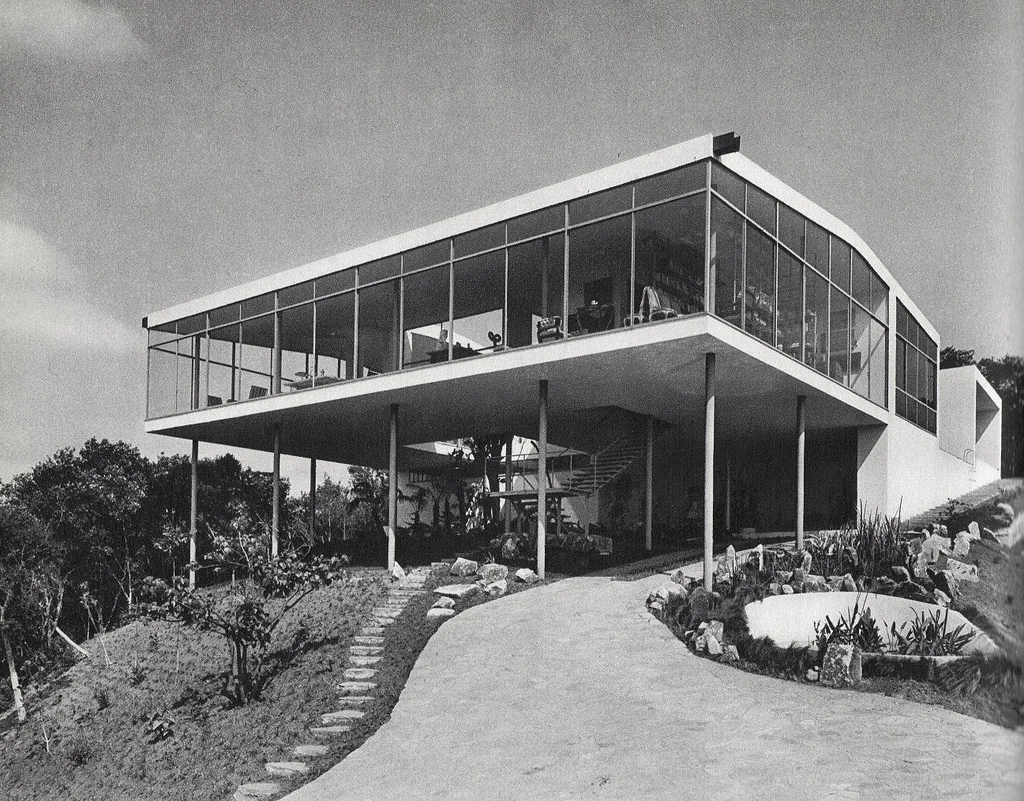
Lina Bo Bardi - Casa de Vidrio, Sao Paulo 1951. Via.
/
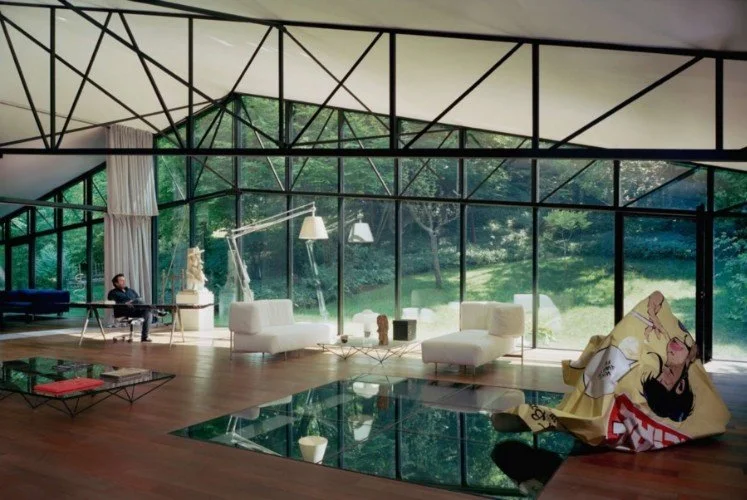
Rudy Ricciotti - Atelier Jean Paul Riopelle, Saint-Cyr-sur-Arthies 2004.
/
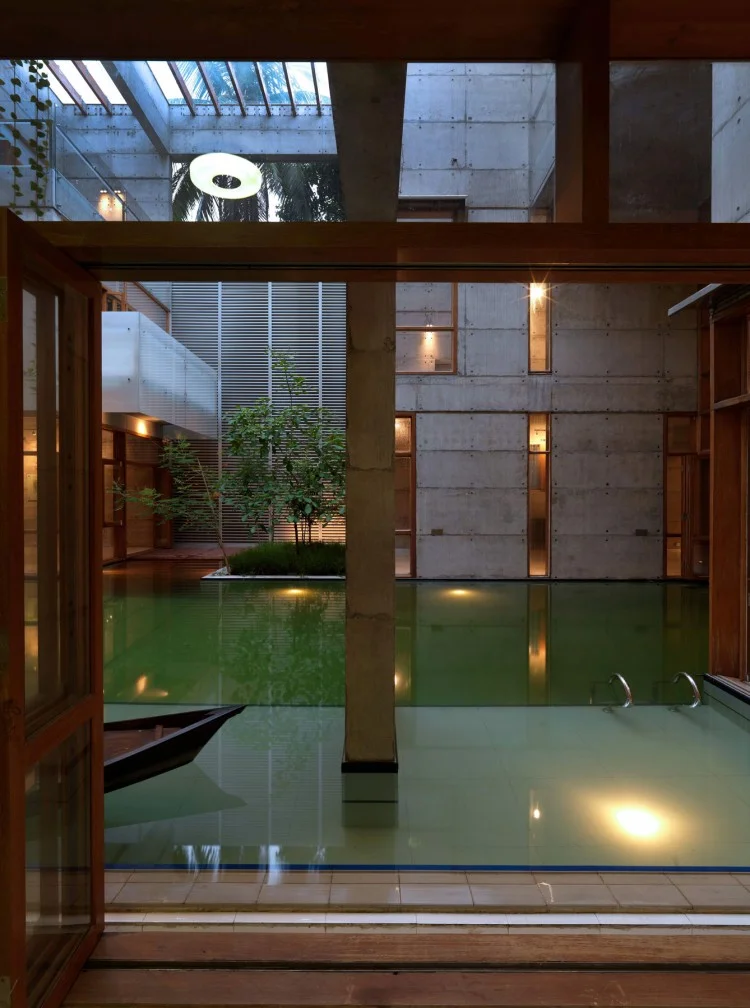
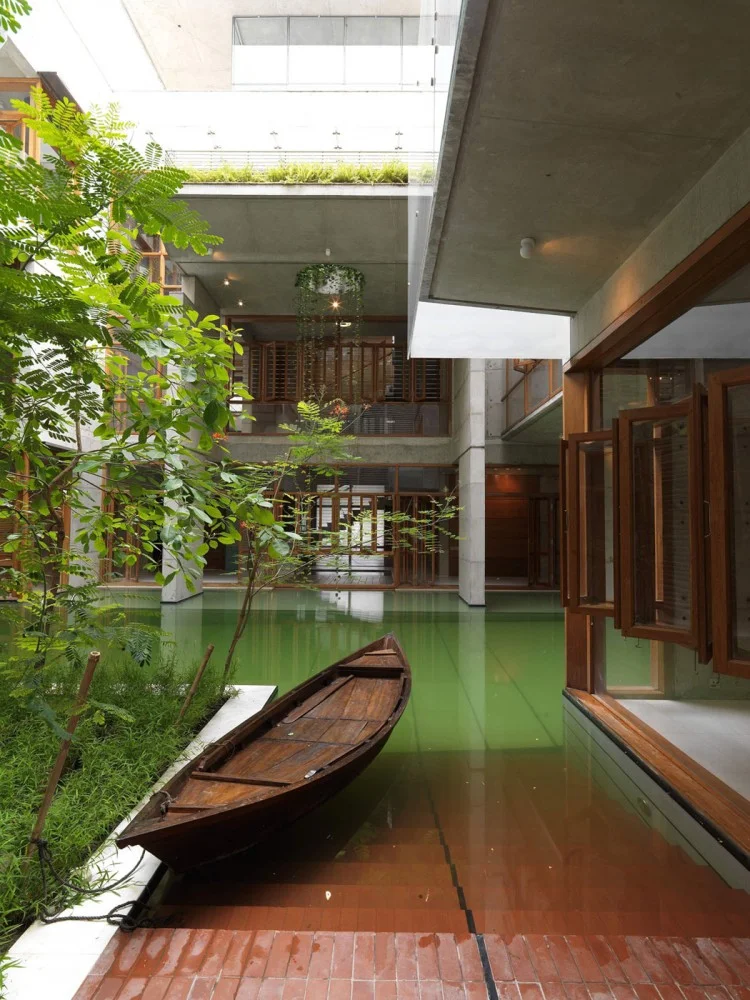
sa residence | pool ~ shatotto architects
/
/


Picture 1: wall mosaic on Darb-E Imam shrine (left) / atomic model of silver-aluminum quasicrystal (right). Picture 2: infographic from the Nobel Foundation.
This year’s Nobel Prize in chemistry was awarded to Dan Shechtman for his discovery of quasicrystals. Quasicrystals, unlike traditional crystals, are aperiodic on the atomic level. Basically, their patterns don’t repeat. When Shechtman first saw this in an experiment in 1982, this was scientific heresy. Crystals were periodic, period. Shechtman must have made a mistake. But he hadn’t, and rather than sitting around sulking about his doubtful colleagues, he worked hard to eliminate possible errors and build further evidence for the existence of quasicrystals. The tide of evidence turned in his favor, and the field of crystallography was changed forever.
In hindsight, quasicrystals are the sort of thing that seem to be too beautiful not to exist. (Which is not to say that, just because a theoretical structure is beautiful, it always turns out to exist—it doesn’t.) Although it took until 1982 to find evidence of atomic patterns that were not periodic, aperiodic tilings show up on the walls of mosques as early as the 12th century.
/

(via imgTumble)
/
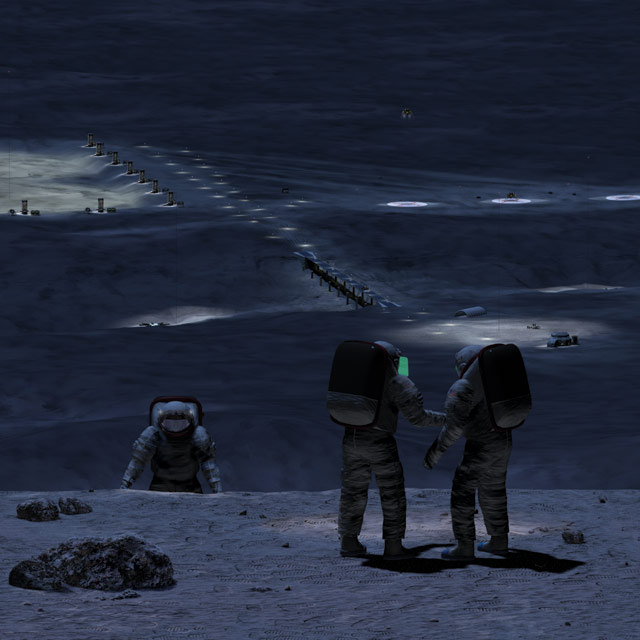
Paul Spudis’ plan for a sustainable and affordable lunar base
It’s long been a dream to have a human settlement on the Moon, but in this age of budget cuts and indecisive plans for NASA’s future, a Moon base may seem too costly and beyond our reach. However, noted lunar scientist Dr. Paul Spudis from the Lunar and Planetary Institute and a colleague, Tony Lavoie from the Marshall Space Flight Center, have come up with a plan for building a lunar settlement that is not only affordable but sustainable. It creates a Moon base along with a type of ‘transcontinental railroad’ in space which opens up cislunar space – the area between Earth and the Moon – for development.