


/

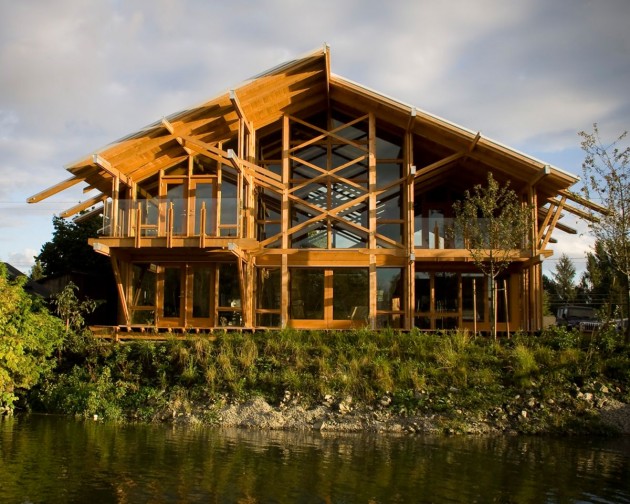
Wind and Water Café, Binh Duong Province, Vietnam.
/
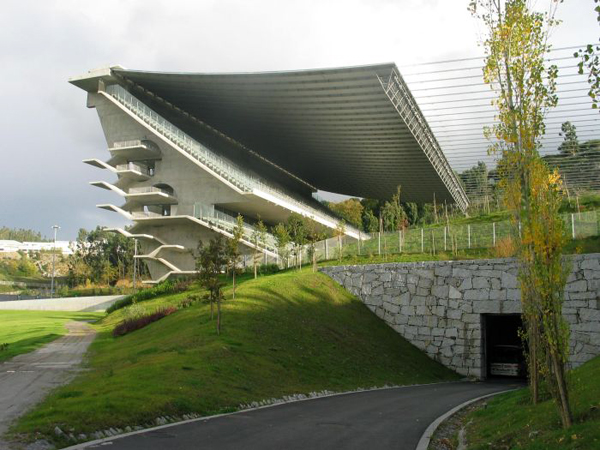
Congrats to Portuguese architect Eduardo Souto de Moura, this year’s big winner of the Pritzker Prize. Cat’s out of the bag early, but we’ve got a guide to his best known works right here.
Estádio Municipal de Braga

/

/
/
/
/

/

/

/

/
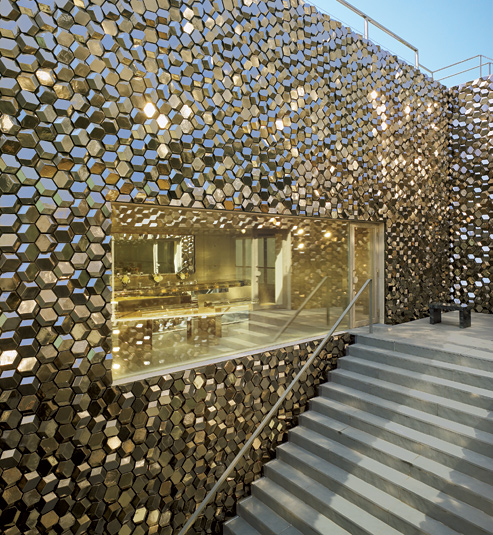
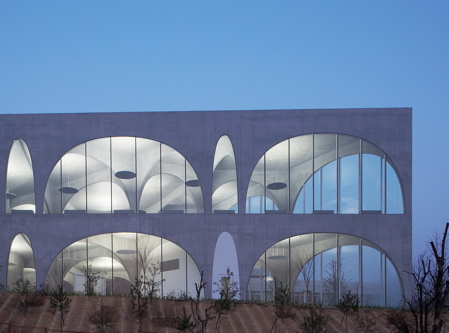
Guest House + Gallery for Takeo Obayashi | Tadao Ando + Olafur Eliasson | This is what happens when one of the best architects of the 20th century and one of the best artists come together.

/

Stanley Tigerman, Bachelor’s Thesis, Yale University, 1960
/
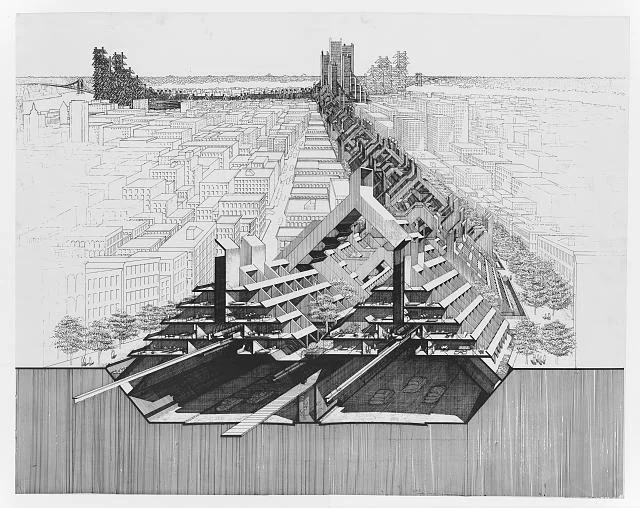
Paul Rudolph, Lower Manhattan Expressway, New York, c. 1970 (via cooperunion)
“The Lower Manhattan Expressway (LME) was first conceived in the late 1930s as an innovative multi-use expressway system running across Lower Manhattan. Had it been constructed, this major urban design project would have transformed New York City’s topography and infrastructure. Rudolph’s proposal for the LME consisted of a Y-shaped highway running from the Holland Tunnel to the Williamsburg and Manhattan Bridges, using Broome, Delancey, and Chrystie Streets and the Bowery as the main corridors. The LME was one of the last large-scale urban planning initiatives in New York, building on the concept of the “megastructure,” which gained prominence throughout the 1950s and 60s. Rudolph envisioned an approach to city planning that would conceive of movement throughout a city as the most common shared experience; multi-use transportation networks would be integrated into one design that would replace plazas as the prevailing urban design element. Plans for the LME therefore included not only an underground highway but also elevators and escalators connecting to the subway system, living spaces, a moving walkway, parking lots, and shared public spaces. Rudolph’s remarkably detailed sketches use single-point perspective, cross-sectional diagramming, and collage to illustrate every detail of the plans, from physical elements such as material and finish to more dynamic variables such as furniture, landscaping, and human activity. Using a trademark large-scale presentation technique, he brought hand-rendered two-dimensional sketches to life with a level of accuracy that has been compared to that of Victorian etchings. The exhibition design will integrate Rudolph’s innovative interior design sensibilities with his conceptualization of space; a selection of work will be presented in a freestanding modular display system that recalls the framework of his famed Lucite chair, designed in 1968.”
/

/
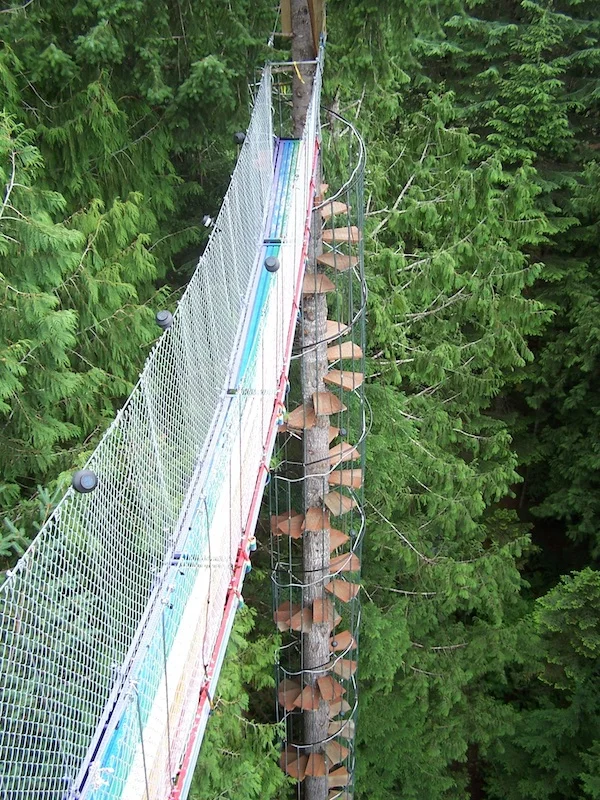
Bill Compher’s Cedar Creek Treehouse clings to a 200-year-old tree growing through the floor and out the roof. Built in the early 1980s, the treehouse offers spectacular views of its natural surroundings. Climbing the aptly-named, 82-foot-tall Stairway to Heaven to reach the observatory should be enough to induce sweaty palms, but if not there’s also a swinging 43 foot-long suspension bridge to negotiate once you’ve wound your way to the top of the spiral staircase. Thrilling? That’s one way of putting it.
/
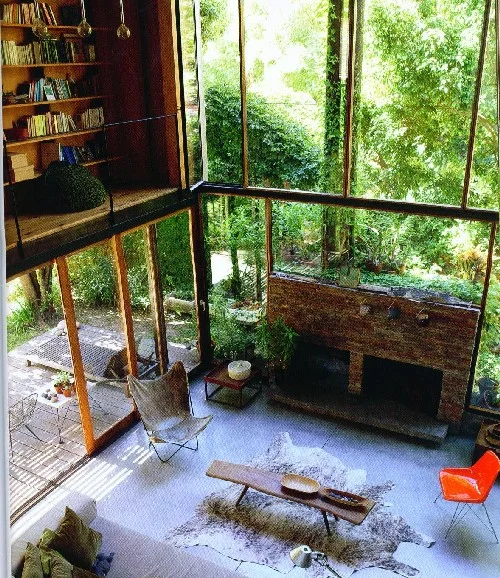
bouwkunst:architecture and nature intertwined, via the brick house
/
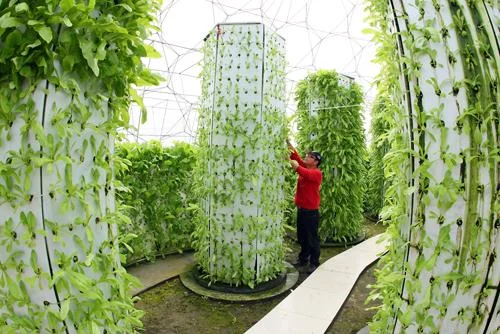
In this dome-shaped greenhouse, 100,000 cultivated vegetables grow without soil. It’s estimated that the vegetable yield in the greenhouse will be 16 times more than the traditional planting method.
/
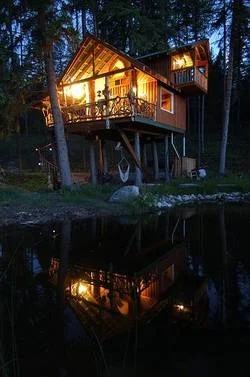
(via sweethomestyle)
/
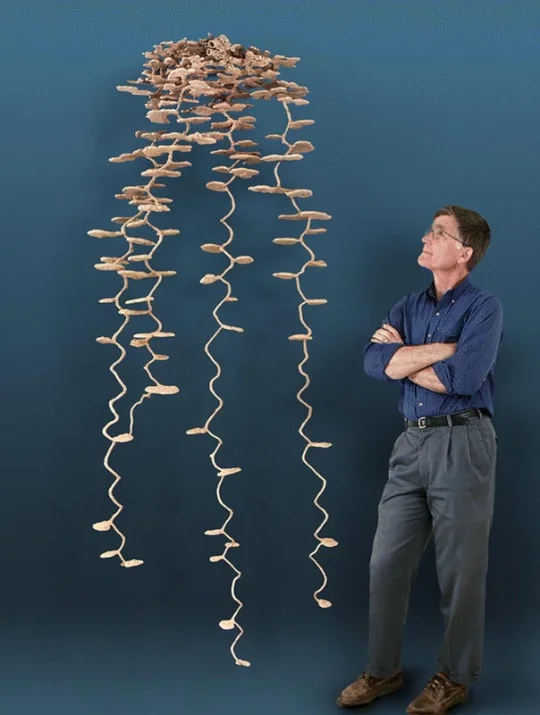
Visualizing Nest Architecture Of The Florida Harvester Ant. Via.